



Build, upgrade or modernize your pharmaceutical packaging and traceability infrastructure with a scalable, standards-aware solution from Jekson Vision.
Jekson Vision provides integrated serialization, aggregation, vision inspection and enterprise traceability solutions for pharmaceutical manufacturers in Sri Lanka, and for manufacturers, CMOs and CDMOs exporting medicines into the Sri Lankan market.
Sri Lanka's regulatory framework includes product-specific QR codes or barcodes on commercial pharmaceutical packaging, together with requirements around product identification, manufacturing and expiry information, and an NMRA Registered Product sticker showing the maximum retail price (MRP). The National Medicines Regulatory Authority (NMRA) has issued subsequent amendments to the labeling requirement; manufacturers should confirm the latest applicable notice for their products before implementation.
Whether you are implementing Sri Lanka-specific product identification, upgrading an existing packaging line, adding vision verification or preparing one architecture for multiple regulated markets, Jekson can help you design an appropriate solution.
Sri Lanka's National Medicines Regulatory Authority (NMRA) regulates medicines and related pharmaceutical activities under the National Medicines Regulatory Authority Act No. 5 of 2015.
In 2024, NMRA introduced updated pharmaceutical labeling requirements that included a product-specific QR code or barcode from the manufacturer on commercial packs. The information specified for the code includes the product name, generic name and strength, batch number, date of manufacture, date of expiry, and manufacturer name and site address. The 2024 notice also introduced a sticker on each commercial pack showing NMRA approval and the retail price. NMRA has since revised that sticker requirement: its 2026 Labelling Requirement notices specify the wording "NMRA Registered Product" together with the maximum retail price (MRP). Amendment 01 (March 2026) calls for a non-peelable sticker, and Amendment 2 (June 2026) clarifies the requirements for products already bearing the approved MRP and for peelable and non-peelable labels.
NMRA subsequently extended the implementation grace period for product-specific QR codes or barcodes, first from 31 May 2025 to 31 December 2025 and then again through Amendment 04, published on 2 January 2026. Because implementation dates and product scope can change, manufacturers should verify the current requirements directly with NMRA before finalizing a compliance project.
NMRA's published notices focus on product-specific QR codes or barcodes and defined product information on commercial packs. They do not establish a national unit-level serialization and aggregation mandate or an NMRA-operated national track-and-trace platform. Unit serialization, aggregation and enterprise traceability are therefore presented here as capabilities that can be deployed where a project, customer or other market requires them.
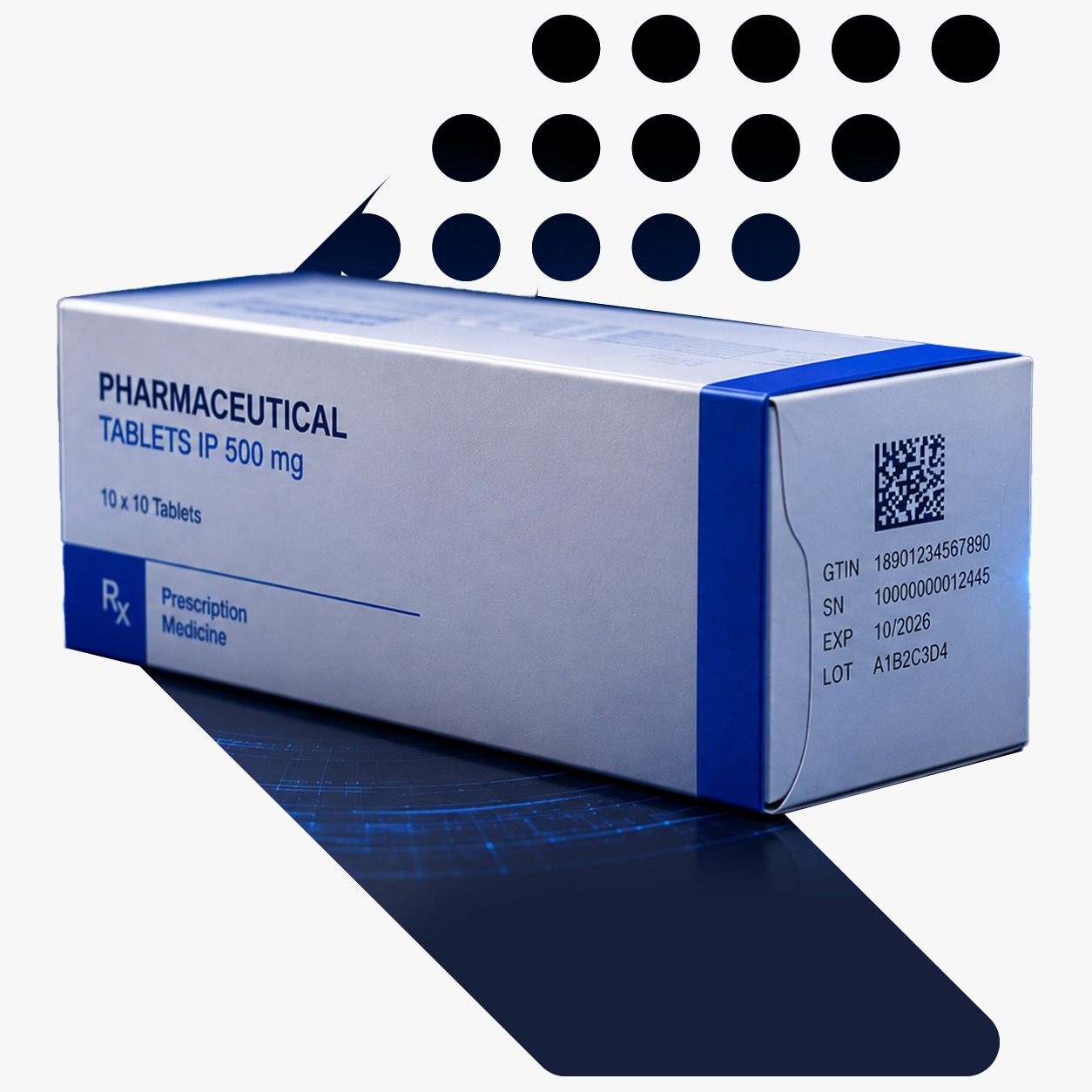
A Sri Lanka implementation can involve:
Meeting Sri Lanka's packaging identification requirements is not simply about printing a QR code or barcode. The packaging line, inspection system, production data, optional serialization and aggregation layers, and enterprise systems need to work together so that the information printed on the pack can be verified and managed reliably.
Jekson can provide solutions across this architecture.
Line-level equipment for QR/barcode printing, barcode verification, OCR/OCV, product tracking, reject management and, where required, serialization commissioning.
Coordinate product identification, inspection and serialization activities across individual packaging lines, batches and production environments at your site.
REETRAK provides line and site-level serialization and aggregation capabilities for projects that require serialized identities and packaging hierarchies.
REESOURCE provides enterprise-level traceability, designed to connect product information across manufacturing, warehouse, distribution and enterprise environments.
Connect traceability information across multiple sites, markets, systems and supply-chain processes, including external regulatory and partner systems where required.
One architecture. Multiple levels. Scalable for Sri Lanka and other regulated markets.
NMRA's published labeling notices specify product-specific QR codes or barcodes and defined product information on commercial packaging. They do not establish aggregation as a general NMRA requirement.
For manufacturers supplying multiple regulated markets, however, serialization and aggregation can be designed into the same packaging and traceability architecture to avoid creating separate systems for different markets.
Jekson provides integrated serialization and aggregation solutions that can capture these relationships on the packaging line and maintain them through rework, sampling and dispatch.
Solutions can include:
Aggregation links serialized lower-level packs with the higher packaging levels into which they are packed. This can support faster receiving, dispatch, inventory handling and traceability for manufacturers operating multi-level packaging and multi-market supply chains.
For Sri Lanka-specific projects, the need for aggregation should be determined from the customer's packaging, distribution, export and multi-market requirements rather than presented as a universal NMRA requirement.
A product-specific code is useful only when it can be read and verified reliably throughout the packaging process.
Jekson's vision inspection systems can verify machine-readable and human-readable information printed on pharmaceutical packaging, with AI-enabled inspection available across the Jekson vision range.
Depending on the application, inspection can include:
The process can be integrated into the packaging line:
This helps identify unreadable, incorrect or mismatched information before products leave the facility and supports consistent packaging-quality control.
Traceability in Sri Lanka involves more than the physical code printed on a pack. NMRA also collects manufacturing, import and distribution information through regulatory data-submission processes. In 2026, NMRA issued data-submission templates and notices for local manufacturers' manufacturing data and for importers' consignment data, effective 1 April 2026, and asked local manufacturers to submit production and supply-chain data for 2023, 2024 and 2025.
A packaging and traceability architecture should therefore consider both:
Physical product identification
Electronic product, production and traceability data
Jekson's architecture connects packaging-line identification and inspection with site-level and enterprise traceability systems, so the information generated on the line can be structured for internal operations and, where applicable, regulatory or partner reporting.
REETRAK provides line and site-level serialization and aggregation capabilities within Jekson's traceability ecosystem, built to support structured product and packaging data.
Key capabilities can include:
REETRAK forms the serialization and aggregation layer between packaging-line equipment and the broader enterprise traceability architecture.
REESOURCE provides the enterprise-level layer of Jekson's traceability ecosystem. It is designed to connect product information across manufacturing, warehouse, distribution and enterprise environments and across multiple markets.
Can REESOURCE integrate with ERP, MES and WMS systems?
Yes. REESOURCE is designed to integrate with existing enterprise systems and packaging-line infrastructure.
Depending on the project architecture, REESOURCE can support integration with:
This allows manufacturers to connect packaging and traceability data with their existing technology environment and prepare information for operational, regulatory and partner reporting.
Many manufacturers supplying Sri Lanka may already operate serialization, coding, inspection or traceability systems for other regulated markets. Others may have packaging lines with partial or outdated coding and inspection capabilities.
The challenge may instead be:
Jekson can conduct a line study of your existing system and recommend an appropriate approach. Whether a line can be retrofitted depends on its equipment, configuration and project requirements.
Depending on your requirements, this could include:
Retrofit
Upgrade suitable existing equipment with new QR/barcode printing, vision inspection, serialization or aggregation capabilities.
Replacement
Replace an existing coding, inspection or serialization solution with a new Jekson architecture.
Additional Line
Add a Jekson packaging, inspection or serialization line as production capacity for Sri Lanka and other markets expands.
Integration
Integrate Jekson systems with suitable existing packaging equipment and enterprise infrastructure.
The objective is to achieve the required functionality while minimizing unnecessary cost and disruption to your operations.
If you are planning a new packaging line or plant expansion, product identification, code verification and traceability can be designed into the line from the beginning.
Jekson can design these capabilities into:
Depending on the project, the solution can include:
This allows packaging identification and traceability to be planned as part of the complete packaging architecture rather than as an isolated machine.