
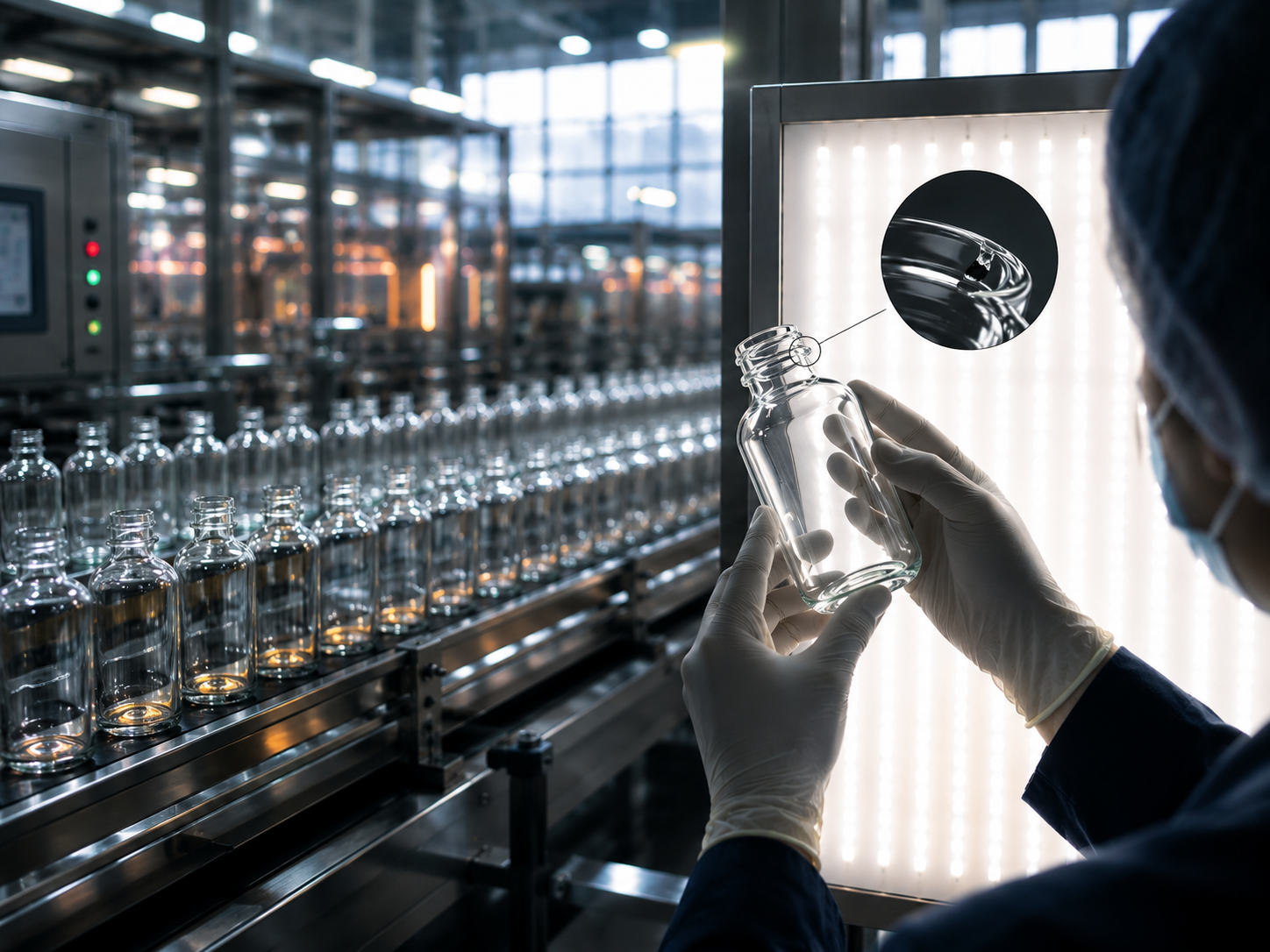
Traditional bottling quality control relies on statistical sampling: pull a few bottles per hour, inspect them manually, and extrapolate. The mathematics of sampling work for slow-drifting process variation — they collapse when the defect source is intermittent or positional. A single worn mold cavity, a damaged star wheel, or a misaligned filler valve produces defects on a fraction of containers, distributed unpredictably across the batch. By the time a human inspector catches one, thousands have shipped.
Square cosmetic defects carry a disproportionate risk profile. A chip at the rim or a check in the neck finish is not merely a visual flaw: it is a potential glass-particle contamination event, a seal-integrity failure, and a consumer-injury liability. Regulators and retail customers treat container-integrity failures as Class I or Class II recall events — the most expensive category a brand can face, measured in recall logistics, destroyed inventory, retailer penalties, and long-tail reputation damage.
The only structurally sound answer is 100% inline inspection: a camera-based decision on every single container before it leaves your facility.
High-resolution imaging of the sealing surface and neck finish detects chips, cracks, checks and overpress defects — the exact defect class behind Europe's most publicized container recalls.
Stones, blisters, bird-swings, wall-thickness anomalies and surface contamination identified on transparent, amber and opaque containers.
Non-contact fill level inspection ensures every container meets declared volume — protecting you from both regulatory short-fill exposure and product giveaway.
Missing caps, cocked caps, high caps, missing tamper bands and foil-seal faults detected before packing.
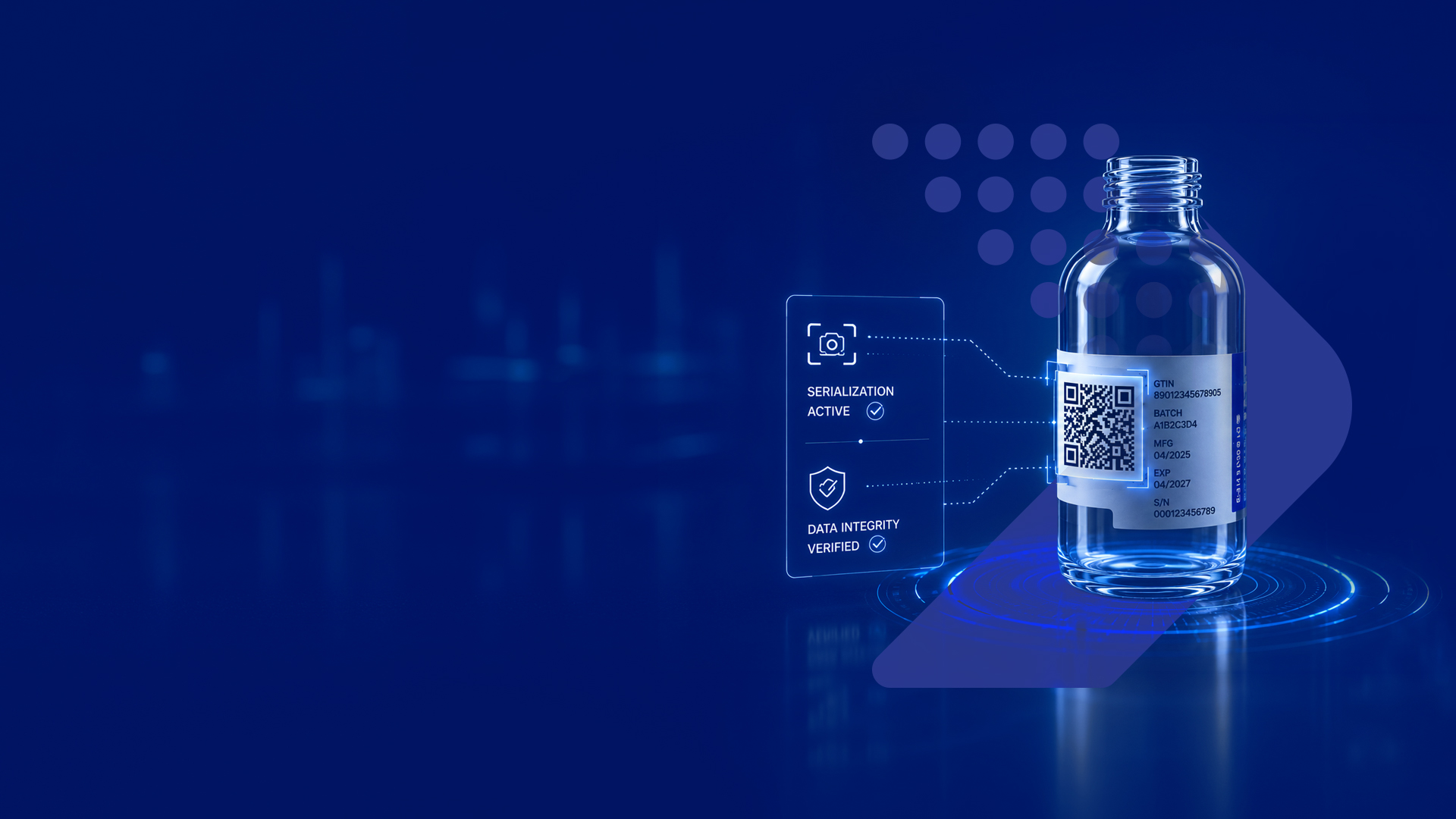
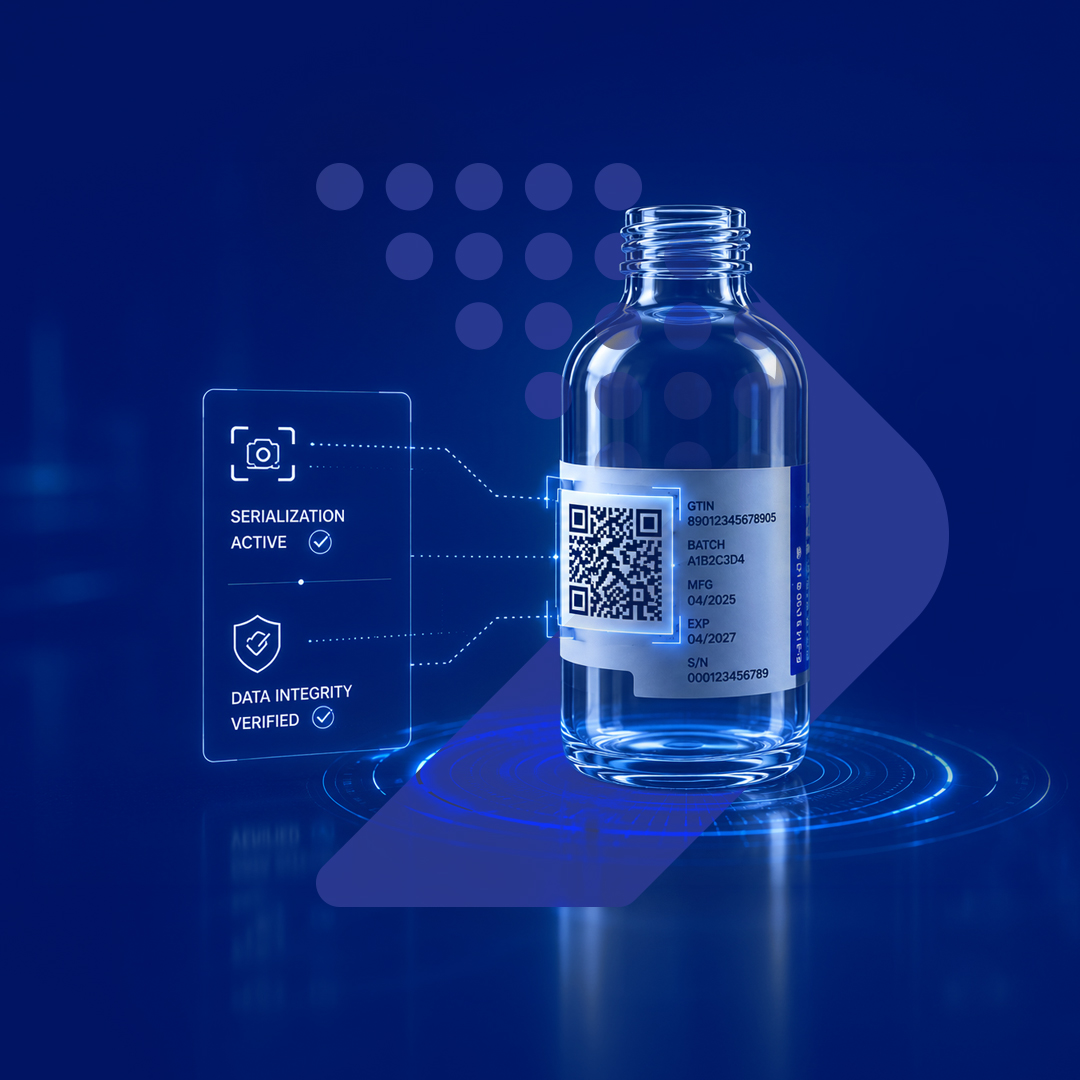
Label presence, skew, and variable data — batch numbers, expiry dates, barcodes — verified for print quality and correctness on every unit.
Deep-learning models distinguish true defects from water droplets, foam and glare — cutting false reject rates that plague rule-based legacy systems.
Bottling lines are hostile environments for vision systems: condensation on cold-filled glass, foam in the headspace, high line speeds, format changeovers, and ambient light variation across shifts. Jekson Vision systems are engineered for these conditions, combining application-specific lighting geometry with AI models trained on real production imagery rather than idealized samples.
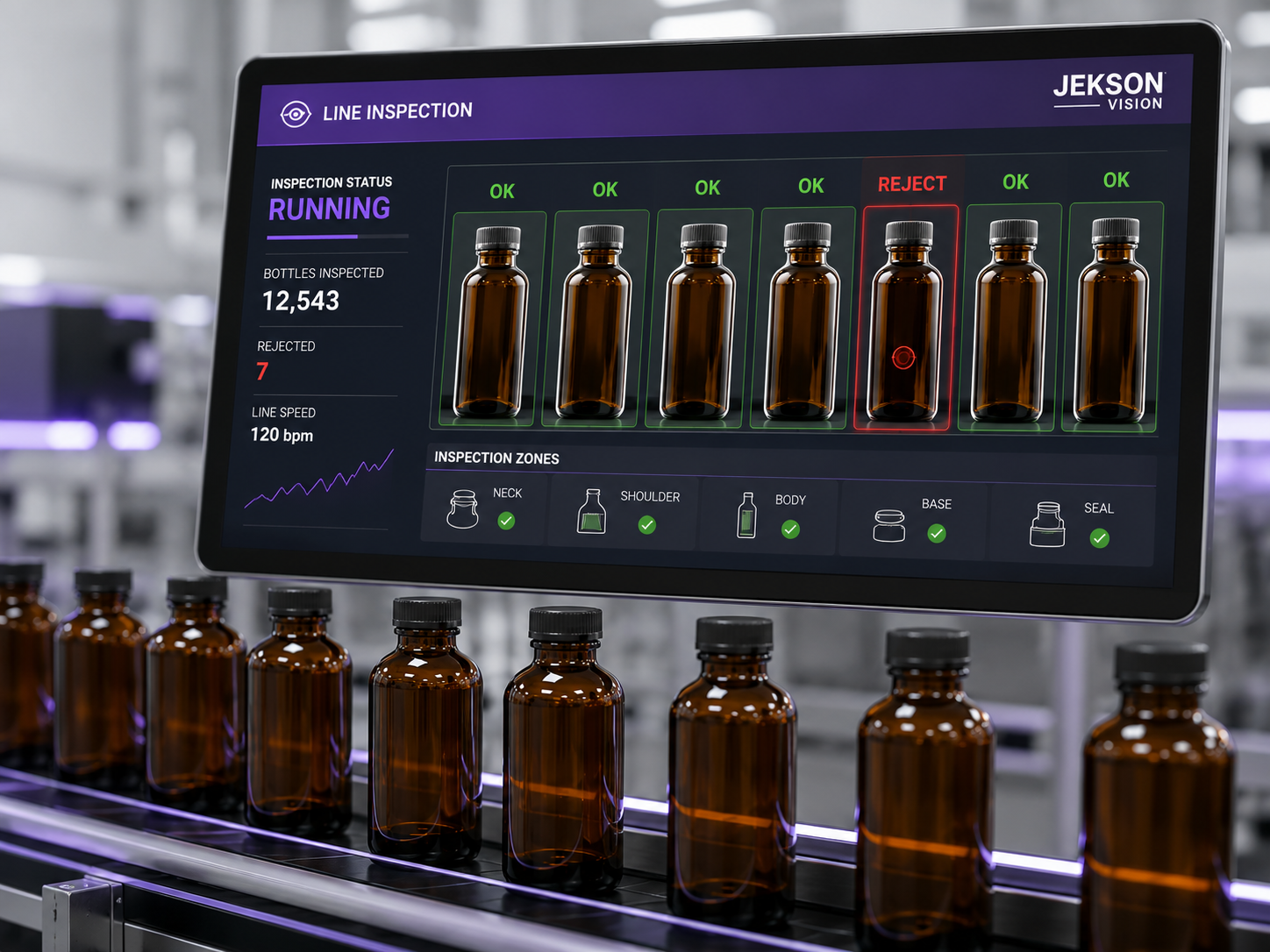
The economics of inline bottle inspection are asymmetric. The cost of a ision inspection systemv is fixed and known. The cost of the incident it prevents is open-ended: a single container-integrity recall routinely runs into millions once product retrieval, destruction, retailer chargebacks and lost listings are counted — before a single consumer claim. Brands do not budget for recalls; they absorb them. Inline inspection converts that unbounded risk into a bounded, predictable capital line item.
There is a second, quieter return: reject-rate intelligence. Because every rejected bottle is photographed and classified, quality teams see exactly which defect class is rising, on which cavity, on which shift — turning the inspection system from a gatekeeper into a process-improvement sensor that reduces scrap at the source.
Send us samples or images. Our applications team returns a defect-detectability report for your exact container and line speed — no cost, no commitment.