Ritesh Indulkar / January 8, 2026 / Blogs Supply Chain
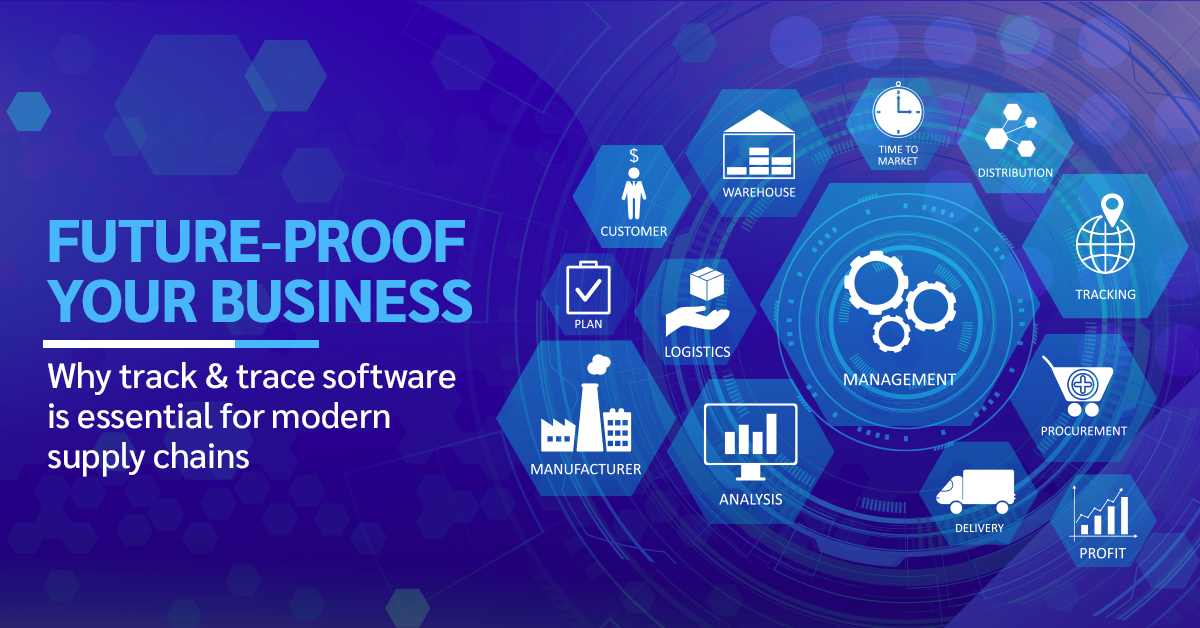
Future-proof Your Business: Why Track and Trace Software is Essential for Modern Supply Chains
Track-and-trace software provides real-time supply chain visibility and monitoring, helping businesses enhance transparency, ensure regulatory compliance, reduce costs through optimized inventory management, mitigate risks, and improve customer satisfaction with accurate delivery estimates across the pharmaceutical, food and beverage, and electronics industries.
The globalization of trade has exponentially increased the complexity of supply chains.
Companies now source materials from multiple countries, making the supply chain longer and more intricate.
At the same time, consumers are becoming more conscious of the origins and journey of the products they purchase, demanding greater transparency and accountability.
Additionally, businesses must navigate a labyrinth of regulatory requirements to ensure compliance, which is becoming increasingly challenging without the right technological tools.
In this article, we explore why Track And Trace Software is crucial for modern supply chains and how it can benefit your business.
Introduction to Track and Trace Software
This software is a system designed to monitor the movement and location of products throughout the supply chain.
From raw materials to finished goods, this software provides real-time visibility and data, ensuring that every step of the supply chain is accounted for.
This capability is essential for businesses looking to future-proof their operations and stay ahead of the competition.
Also, read How Track and Trace Systems Work
Key Benefits of Track and Trace Software
1. Enhanced Visibility and Transparency
Track-and-trace software provides unparalleled visibility into the supply chain, enabling businesses to monitor the movement of goods in real time.
This transparency helps identify bottlenecks, improve efficiency, and ensure that products are delivered on time.
- Real-time Tracking: Businesses can see where their products are at any given moment, reducing the risk of lost or delayed shipments.
- Data-Driven Decisions: Access to real-time data enables businesses to make informed decisions quickly, improving overall supply chain efficiency.
2. Improved Compliance and Risk Management
Compliance with regulations and standards is critical in many industries, including pharmaceuticals, food and beverage, and electronics.
Track-and-trace software helps ensure your business meets these requirements.
- Regulatory Compliance: The software ensures that all products meet the necessary regulations, reducing the risk of fines and legal issues.
- Risk Mitigation: By providing detailed records of each step in the supply chain, businesses can quickly identify and address potential risks and issues.
3. Cost Reduction and Increased Efficiency
Implementing this software can lead to significant cost savings and efficiency gains.
- Reduced Losses: With the ability to track products in real time, businesses can reduce losses due to theft, damage, or misplacement.
- Optimized Inventory Management: Better visibility into inventory levels allows for more accurate forecasting and reduces the need for excess stock, saving on storage costs.
4. Enhanced Customer Satisfaction
Track-and-trace software can play a significant role in improving the customer experience.
- Accurate Delivery Estimates: Providing customers with real-time updates on their orders enhances trust and satisfaction.
Quality Assurance: Ensuring that products meet quality standards throughout the supply chain builds customer confidence and loyalty.
Also read Understanding the Basics of Track & Trace
Track and Trace Software: Industry Facts and Insights
- Market Growth: The global track-and-trace solutions market is expected to grow from USD 2.58 billion in 2020 to USD 6.55 billion by 2027, at a CAGR of 14.2%.
- Adoption in Pharmaceuticals: The pharmaceutical industry is a major adopter of track-and-trace technology due to stringent regulations and the need for product authentication.
- Blockchain Integration: Some track-and-trace systems are now incorporating blockchain technology to enhance data security and transparency.
Implementing Track and Trace Software
Implementing this software can seem daunting, but the benefits far outweigh the challenges.
Here’s how to get started:
1. Assess Your Needs
Determine what aspects of your supply chain require the most visibility and control.
Identify pain points and regulatory requirements that the software must address.
2. Choose the Right Solution
Select a software that fits your business needs.
Look for features such as real-time tracking, compliance management, and data analytics.
3. Integrate with Existing Systems
Ensure the chosen software seamlessly integrates with your existing systems.
This integration is crucial to maximizing the benefits of track-and-trace technology.
4. Train Your Team
Provide adequate training for your team to ensure they can use the new software effectively.
This training will help maximize the software’s potential and ensure a smooth transition.
Conclusion
Track-and-trace software is an essential tool for modern supply chains.
It offers enhanced visibility, improved compliance, cost reduction, and increased customer satisfaction.
As supply chains become more complex, the need for such technology will only grow.
Businesses looking to stay competitive must invest in track-and-trace solutions to future-proof their operations.
For a robust track-and-trace solution, consider Jekson Vision’s offerings.
Their innovative solutions can help you achieve a more efficient, transparent, and resilient supply chain.

Ritesh Indulkar