


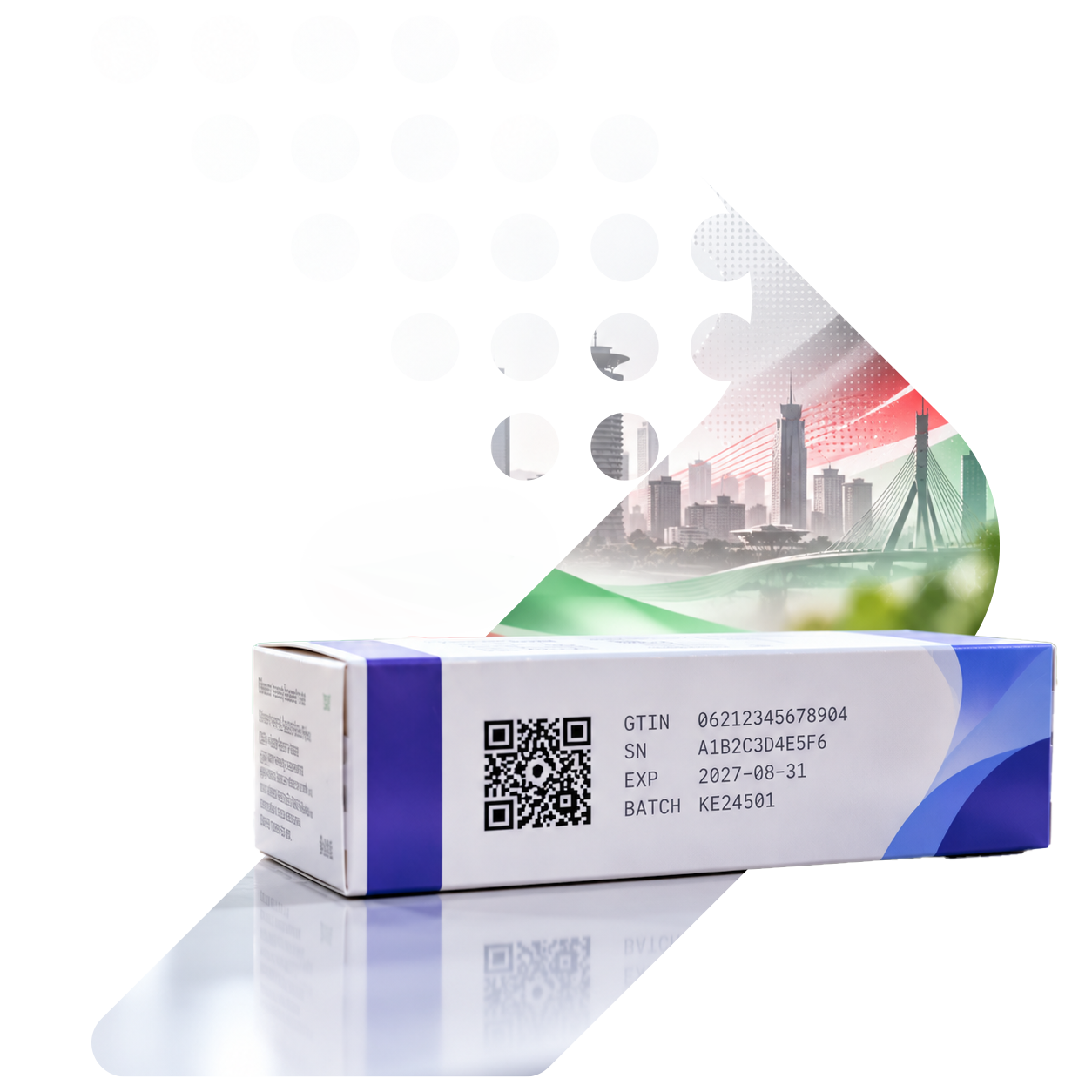
Build, upgrade or modernize your pharmaceutical serialization infrastructure with a scalable, GS1-based solution from Jekson Vision.
Jekson Vision provides integrated serialization, aggregation, vision inspection and enterprise traceability solutions for pharmaceutical manufacturers in Kenya, and for manufacturers, CMOs and CDMOs exporting Health Products and Technologies (HPTs) into the Kenyan market.
Whether you are serializing a new packaging line, upgrading an existing system, adding aggregation or connecting line-level data with enterprise traceability, Jekson can help you design an architecture suited to your operation and to Kenya's evolving traceability requirements.
Kenya is implementing a national system to authenticate and trace Health Products and Technologies across the pharmaceutical supply chain. In October 2025, the Pharmacy and Poisons Board (PPB) published its Standards for Authentication and Traceability of Health Products and Technologies, aligning Kenya with GS1 global standards.
The framework is being implemented by the PPB together with the Digital Health Agency (DHA), under the Digital Health Act, 2023, the Health Act and the Pharmacy and Poisons Act. The Ministry of Health announced that Kenya's National Track and Trace System (NTTS) would become operational from 1 July 2026, as part of a wider digitalisation of healthcare that also includes the Facility360 and Practice360 licensing platforms.
PPB has announced a phased approach. During a transition period to 31 December 2026, traceability is based on batch numbers declared to the Board. From 1 January 2027, PPB has stated that HPTs manufactured in or imported into Kenya are expected to meet full authentication and traceability requirements, including unit-level serialization in line with GS1 standards. Manufacturers should confirm the requirements that apply to their products directly with PPB.
Jekson Vision does not administer Kenya's National Track and Trace System. Jekson Vision provides the hardware, software, vision inspection and integration capabilities manufacturers use to generate, verify and manage serialized product data within that ecosystem.
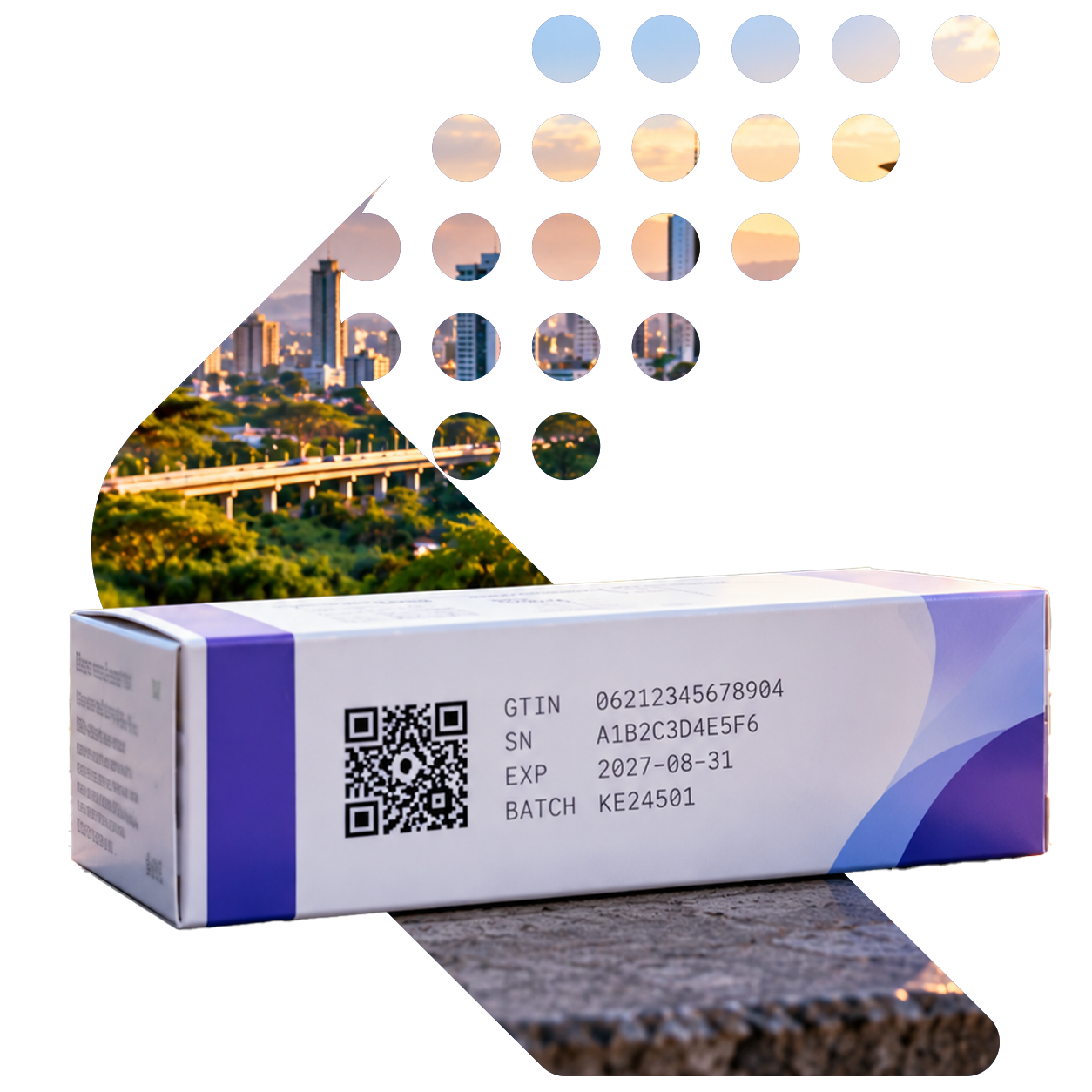
A serialization implementation for Kenya can involve:
Meeting Kenya's traceability expectations is not simply about printing a code on a carton.
The packaging line, serialization software, aggregation process and enterprise traceability systems need to work together, and the data they create needs to be accurate enough to be relied upon further down the supply chain.
Jekson can provide solutions across this architecture.
Line-level equipment for serialization printing, GS1 DataMatrix printing, barcode verification, OCR/OCV, product tracking, reject management and serialization commissioning.
Coordinate serialization activities across individual packaging lines, batches and production environments at your site.
REETRAK provides line and site-level serialization and aggregation capabilities, managing serial numbers, production data and packaging hierarchies.
REESOURCE provides enterprise-level traceability, designed to connect serialized product information across manufacturing, warehouse, distribution and enterprise environments.
Connect traceability information across multiple sites, markets, systems and supply-chain processes, including external regulatory and partner systems where required.
One architecture. Multiple levels. Scalable as Kenya's requirements evolve.
Serialization gives each pharmaceutical saleable unit a unique identity.
Aggregation records the relationship between those serialized units and the higher packaging levels they are packed into.
Jekson provides integrated serialization and aggregation solutions that capture these relationships on the packaging line and maintain them through rework, sampling and dispatch.
Solutions can include:
Aggregation allows a scanned shipper or pallet to be linked to every serialized unit inside it, making receiving, dispatch and traceability faster and more reliable. Aggregation is part of the wider direction of pharmaceutical traceability programmes, and manufacturers supplying several markets often build it in from the start rather than retrofit it later. Requirements for Kenya may vary by product category and implementation phase.
A unique identifier is only useful if it can be read reliably by every party that scans it, from the packaging line to the pharmacy.
Jekson's vision inspection systems verify the machine-readable and human-readable information printed on pharmaceutical packaging, with AI-enabled inspection available across the Jekson vision range.
Depending on the application, inspection can include:
The process can be integrated into the packaging line:
This helps prevent unreadable, incorrect or mismatched codes from leaving your facility, reducing the risk of products being rejected or queried further along the Kenyan supply chain.
Traceability in Kenya involves more than physical serialization.
The Ministry of Health has directed that pharmaceutical products and transactions be captured and reported through national digital platforms, including the National Track and Trace System, with interoperability with national digital health systems. This forms part of Kenya's broader digital health transformation led by the Ministry of Health, PPB and the Digital Health Agency.
A serialization architecture therefore needs to consider both:
Physical product identification
Electronic product and traceability data
Jekson's architecture connects packaging-line serialization with site-level and enterprise traceability systems, so the data you generate on the line is structured, complete and ready to be shared in the formats your markets require.
REETRAK provides line and site-level serialization and aggregation capabilities within Jekson's traceability ecosystem, built on GS1 standards.
Key capabilities can include:
REETRAK forms the serialization and aggregation layer between packaging-line equipment and the broader enterprise traceability architecture.
REESOURCE provides the enterprise-level layer of Jekson's traceability ecosystem. It is designed to connect serialized product information across manufacturing, warehouse, distribution and enterprise environments, and across the multiple markets many manufacturers supply.
Can REESOURCE integrate with ERP, MES and WMS systems?
Yes. REESOURCE is designed to integrate with existing enterprise systems and packaging-line infrastructure.
Depending on the project architecture, REESOURCE can support integration with:
This allows manufacturers to connect serialization and traceability data with their existing technology environment and prepare it for regulatory and partner reporting.
Many manufacturers supplying Kenya already serialize for markets such as the EU, the USA, Russia or India. Others have packaging lines with partial or outdated serialization capability.
The challenge may instead be:
Jekson can conduct a line study of your existing system and recommend the most appropriate approach. Whether a line can be retrofitted depends on its equipment, configuration and project requirements.
Depending on your requirements, this could include:
Retrofit
Upgrade suitable existing equipment with new serialization, vision inspection or aggregation capabilities.
Replacement
Replace an existing serialization solution with a new Jekson architecture.
Additional Line
Add a Jekson serialization line as your production capacity for Kenya and other markets expands.
Integration
Integrate Jekson systems with suitable existing packaging equipment and enterprise infrastructure.
The objective is to achieve the required functionality while minimizing unnecessary cost and disruption to your operations.
Kenya's growing focus on local pharmaceutical manufacturing means many new lines and plant expansions are being planned now. It is far more efficient to design serialization and traceability into a new line than to add them later.
Jekson can design serialization and traceability capabilities into:
Depending on the project, the solution can include:
This allows serialization to be planned as part of the complete packaging and traceability architecture rather than as an isolated machine.